Jonathan Crowe

My Correct Views on Everything

2312

Book cover: 2312 The Hugo Voter Packet includes electronic copies of the nominated works, including the one book nominated for best novel that we didn’t already own: 2312 by Kim Stanley Robinson. There was a time in the mid-1990s when I wouldn’t have missed a new novel by Kim Stanley Robinson, but I fell behind in the early 2000s, when I was reading less fiction; I still haven’t read The Years of Rice and Salt, though I bought it when it came out in hardcover, and I’ve only read the first of his “Science in the Capital” trilogy.

2312 reminds me of why I liked Robinson in the first place. Set three hundred years in the future, in the eponymous year, it’s a big-picture look at the solar system, at a grand scale, with digressions and essays, snippets and transcripts, in the style of John Dos Passos (John Brunner’s Stand on Zanzibar and Joe Haldeman’s Mindbridge being earlier science-fictional iterations of this style), dealing with terraforming on many worlds, interplanetary economics, artificial intelligence and the environmental rehabilitation of a substantially warmed and distressed Earth.

There is considerable, understated grandeur here as Robinson describes his transformed future solar system: a city on rails on Mercury, fleeing the Sun; asteroids converted into wildlife refuges; a frozen Venus hidden by a sunshade. But in the foreground there’s this odd-couple romance between the Mercurial Swan and the Saturnine Wahram, whose roles in a secret project undertaken by Swan’s late grandmother bring them together again and again.

Its style is quintessentially Robinson: contemplative and focused on his characters’ inner lives, tinged more with melancholy rather than excitement, thoughtfulness rather than adventure. It draws upon the planetary romances of his early career, e.g. The Memory of Whiteness — Terminator, the moving city on Mercury, comes from “Mercurial,” a story first published in 1985 — and infuses it with the environmental concerns and critique of capitalism that are nearly always present in his near-future science fiction. It can, in a way, be seen as a summation of Robinson’s entire career.

And it won the Nebula Award last weekend. I suspect it’ll be the heavy favourite for the Hugo Award as well. It’s up against Saladin Ahmed’s Throne of the Crescent Moon (my review), Lois McMaster Bujold’s Captain Vorpatril’s Alliance, Mira Grant’s Blackout (my review) and John Scalzi’s Redshirts — I’ve read all but the Bujold, and so far I’m preferring 2312.

2312 by Kim Stanley Robinson
Buy at Amazon (Kindle, UK) • publisher’s pageGoodreadsLibraryThing

IC 2944

The Very Large Telescope Snaps a Stellar Nursery and Celebrates Fifteen Years of Operations

The European Southern Observatory, one of my favourite sources of open-licence astrophotography, marked the 15th anniversary of its Very Large Telescope by releasing this new image of IC 2944, a stellar nursery some 6,500 light years away in the constellation Centaurus. The picture combines visible light with narrowband hydrogen-alpha and oxygen-III emissions. Check out all the Bok globules! Image credit: ESO.

New Google Maps: First Impressions

To be honest, my first impression of the new Google Maps design was how sluggish it seemed. My iMac has a quad-core Ivy Bridge Core i5, a dedicated graphics chipset and a 20-Mbps Internet connection, so I found that a bit disappointing. I didn’t think “resource intensive” would have implications for my current setup. It seemed a little better, though not perfect, using Chrome instead of Safari; Chrome also supports integrated 3D Google Earth mode (Safari is relegated to Lite mode). Performance is going to be something to keep an eye on; I hope they can optimize it.

Eliminating whitespace gives you a nice gigantic map, which is hard to consider bad in any way, but it does feel a bit overwhelming, like there’s too much map to process. Google keeps most of the map, except for major highways, dim for the most part, highlighting relevant content for specific uses — i.e., click on a location and nearest intersecting main streets highlight, ask for directions and exit numbers appear even at high zooms. It’s very, very subtle, something you might not notice. Much of the interface is moved from the sidebar to the map: Street View is accessed by clicking the road, for example — Pegman is nowhere to be seen.

Kenneth Field has some thoughts on the new maps, particularly in terms of whether Google has succeeded in creating personalized cartography. AppleInsider’s glee at discovering the same sort of image distortions that were called out in Apple’s maps last fall is plain for anyone to see.

Have you had a chance to play with it yet?

2013 Hugos: Short Stories

Now that the Nebulas have been awarded and the Hugo Voter Packet has been released, it’s time to turn to the Hugo nominees. With my tendency to fall behind, I’d better get at this smartly, and I’ll start with the short story nominees.

You will remember that Aliette de Bodard won the Nebula in this category, for “Immersion” — a story I thought very highly of. But winning the Nebula doesn’t always make a story the favourite for the Hugo. Only seven times in the last 40 years (17.5 percent) has a short story won both trophies: before “The Paper Menagerie” by Ken Liu did so last year, the last story to win both awards was Connie Willis’s “Even the Queen,” 20 years ago. And “Immersion” is up against different competitors, because it was the only story to be nominated for both.

There are, in fact, only three stories on the ballot this year instead of the usual five. As I mentioned before, this is due to the rule requiring each story to receive a minimum of five percent of the nominating ballots. The rule also requires at least three stories on the ballot, whether or not they made the five percent threshold. (I’m looking forward to seeing the raw numbers listing the total votes per nominee, which get released after the Hugo ceremony.)

I suspect that this is likely the hardest category to get a nomination in, other than best novel. So many short stories are being published — in the traditional and online magazines, in anthologies, in mainstream venues and obscure corners of the field — that nobody can possibly read them all without making a deliberate effort. And many of those venues don’t publish novelettes or novellas. The field is fragmented to the point where virtually every venue has the same size readership, according to Locus numbers (around 25,000), but the readerships don’t necessarily overlap. The centre does not hold. Consensus is more difficult.

That said, here’s what the final ballot looks like:

I’ve already discussed “Immersion” in the Nebula short story post, so let’s deal with the other two, both of which are stories by writers whose work, like Aliette’s, I like very much, so this is a ballot relevant to my interests.

First, “Mantis Wives” by Kij Johnson, whose short story collection I reviewed here last summer. It’s a brief piece, less than a thousand words, and elegantly brutal in the manner of “Spar” and “Ponies”: mantis females have elevated the post-coital killing of males to an art, which are described in spare, lyrical, poetic detail.

Book cover: The Future Is Japanese

Next, “Mono no Aware,” the fourth story by Ken Liu to receive an award nomination this year. (He had three Nebula nominations, none of which carried over to the Hugo.) In a blog post from 2010, Ken explains how mono no aware (もののあはれ) — the awareness of the impermanence and transience of things — is common in a lot of Japanese and Chinese art, and turns up in much of his own work. In the story, the protagonist, Hiroto, is literally the last Japanese person, rescued from the destruction of the Earth and living on a starship headed toward 61 Virginis; he reflects on the passing of the Earth, of Japan, of his family, and in the end of himself, as he sacrifices himself to save the lightsail propelling the ship to their destination.

It’s a deeply felt and powerful story, possibly the best of his four nominees, with the emotional heft of “The Paper Menagerie.” In many ways it’s the mirror image of “Immersion”: both stories are about loss and identity; Ken’s is wistful where Aliette’s is white-hot angry. The two stories could very easily be talked about in tandem and would make for a great story club discussion, I think. I also think I’m going to have a hell of a hard time deciding between them.

My Own Private Westeros

Here’s someone building — by hand — a scale model of Westeros. Updated with photos at every step of construction. Madness! I approve. Via Boing Boing.

The Ring Nebula

Ring Nebula (M57)

Today a new Hubble image was released that promises “the most detailed observations ever” of the Ring Nebula (Messier 57), a planetary nebula about 2,300 light years away. It’s easily spotted in backyard telescopes (I’ve seen it many times myself). This image, taken through a combination of regular red, green and blue filters along with narrowband filters that reveal specific emissions, is good enough to form the basis of a 3D model. And if that’s not enough Ring Nebula for you, here’s another image combining Hubble narrowband data with ground-based infrared observations that reveals the nebula’s outer halo. Image credit: NASA, ESA, and the Hubble Heritage (STScI/AURA)-ESA/Hubble Collaboration.

Here Be Sea Monsters

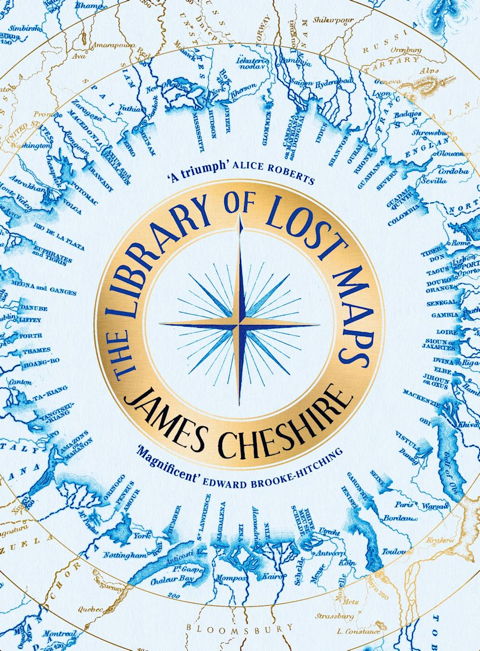
Book cover: Sea Montsers on Medieval and Renaissance Maps Just found out about Chet Van Duzer’s Sea Monsters on Medieval and Renaissance Maps, a new book out this month from British Library Publishing, which explores the monsters drawn on maps from the 10th to the 16th century. From the publisher:

The sea monsters on medieval and Renaissance maps, whether swimming vigorously, gambolling amid the waves, attacking ships, or simply displaying themselves for our appreciation, are one of the most visually engaging elements on these maps, and yet they have never been carefully studied. The subject is important not only in the history of cartography, art, and zoological illustration, but also in the history of the geography of the ‘marvellous’ and of western conceptions of the ocean. Moreover, the sea monsters depicted on maps can supply important insights into the sources, influences, and methods of the cartographers who drew or painted them.

I may have to get this.

2012 Nebula Award Winners

The Nebula Awards were handed out last night. The ceremony ran late and it was held in San Jose, California this year, so we were up far past our usual bedtime to watch the webcast: it was after midnight, our time, by the time they started giving away the polymethyl methacrylate cuboids.

Here is a list of the winners; it’s been reposted many other places, so it’s not necessary for me to do it again here.

I was happy to see two of my favourite stories win awards: Aliette de Bodard’s “Immersion” (short story) and Andy Duncan’s “Close Encounters” (novelette). Nancy Kress’s After the Fall, Before the Fall, During the Fall wasn’t my pick for novella, but it probably would have been my second or third choice. As for best novel, I haven’t read 2312 yet, but it ought to be in the imminent Hugo voters’ package. I’ve only read about half the nominees so far, and on that admittedly limited basis I’d have given it to The Drowning Girl by Caitlín R. Kiernan. That said, I’m still looking forward to reading The Killing Moon by N. K. Jemisin, because I tend to like her stuff a lot (it’s on my bookshelf, but I’m behind: I can only read 80 or 90 books a year, you know).

As for handicapping the Hugos on the basis of these results, reply hazy try again. The de Bodard, Kress and Robinson may well be the favourites going into the Hugo voting, but they’re up against a different field: only two novels, three novellas, one novelette and one short story have made the final ballot for both awards (Duncan did not make the Hugo ballot). I’ll be looking at those Hugo nominees soon. Well maybe not soon — this is me, after all — but certainly before voting closes. Probably.

Pine Siskins

Pine Siskin

The latest new species to arrive at our bird feeders appears to be the Pine Siskin (Carduelis pinus). It’s a passerine finch that resembles the goldfinches and redpolls we see more frequently. Like goldfinches and redpolls, they flock in substantial numbers: I counted more than 20 of them today. More photos here, here and here.

Earthquake Near Shawville

The earthquake that hit eastern Ontario and western Quebec this morning had its epicentre awfully close to us here in Shawville, Quebec. Which is to say — despite Toronto’s usual best efforts to make the earthquake theirs — that we felt it here sooner, and possibly harder, than the rest of you. Both the Ottawa Citizen and the Canadian Press include quotes from Shawville’s mayor, Albert Armstrong, who described it as unlike anything he’d ever lived through before, and he’s lived here all his life.

I haven’t experienced many earthquakes (the last one was in June 2010) so it’s hard for me to compare; this one felt, well, wobblier than others, like I was in the backseat of a car driving along one of Quebec’s finer highways on a hot day with the windows up, and if it doesn’t stop soon I’m going to barf. That kind of motion. One person said I’d tweeted about it before anyone else (at least that she saw), but then I was at the keyboard when it hit; all I had to do was command-tab to the Twitter app and type one word. The quake lasted more than long enough for that.

Natural Resources Canada lists it as a magnitude 5.2 quake and puts the epicentre 18 kilometres northeast of Shawville; the USGS calls it a magnitude 4.4 quake and locates its epicentre 19 km north-northeast of here. I’ve pinpointed the two organizations’ epicentres, showing the differences, on this map.

Either way, the epicentre was situated in the rural municipality of Thorne, which I should say something about, because it usually doesn’t get much attention. It’s sparsely populated, with fewer than 300 permanent residents (an 18 percent drop over the past 20 years); the seasonal population of cottagers is more than three times as big. It’s Shield country (hence the earthquake) and so not good farming, but it had an influx of German settlers in the late 19th century whose main legacy is an Oktoberfest held each October in Ladysmith, Thorne’s centre. (Seriously, try the wings at the Hotel Ladysmith.) The arrival of a small cohort of American draft dodgers has made the joint much more interesting in recent decades.

Older Entries

An Amphibian Typhoid Mary
Spoilers Have an Expiration Date
A Topographic Map of Titan
Google Maps Redesigned
2012 Nebulas: Novelettes
A Question About Cardinals
Frogs and Toads in Shawville
My Beloved Brontosaurus
2012 Nebulas: Novellas
OpenStreetMap’s New Map Editor
NGC 6559
Saturday at Little Ray’s
Reptiles in Renfrew County
Black and Blue
Your Choice of Platform Has Consequences
Sunday Sewer Fun
A Snake with No Name
A Year of the Sun
Thanks for All the Fish: Twenty Thousand Leagues Under the Seas
Check Against Tyranny